
Nvidia fell 14% on Friday despite reporting that sales had more than doubled, and the case for buying the dip now depends on how much faith investors have in the earnings ahead.
The bargain case for Nvidia has one awkward detail. On Friday, November 20, the stock fell 14% even though the company had just reported that sales had more than doubled from a year earlier. Reuters said two people briefed on the matter told it the SEC was looking at Nvidia’s accounting. What if traders are selling because they’ve started to doubt the earnings they’re being asked to buy? [Reported] Reuters · Nvidia earnings release
| U.S. market on November 20, 2026 | Change from Thursday’s close |
|---|---|
| S&P 500 | −3.7% |
| Nasdaq-100 | −5.6% |
| PHLX Semiconductor Index | −10.7% |
| Nvidia | −14.0% |
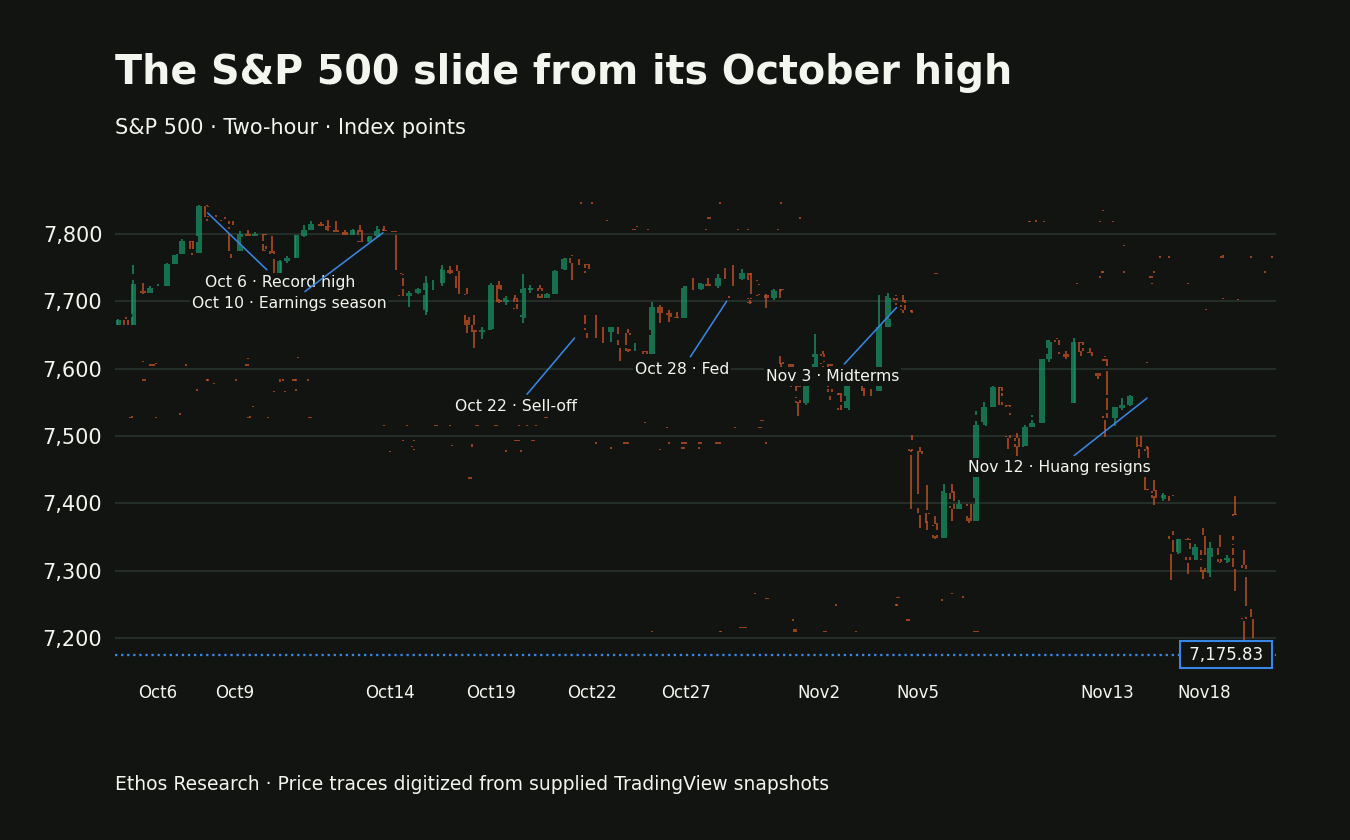
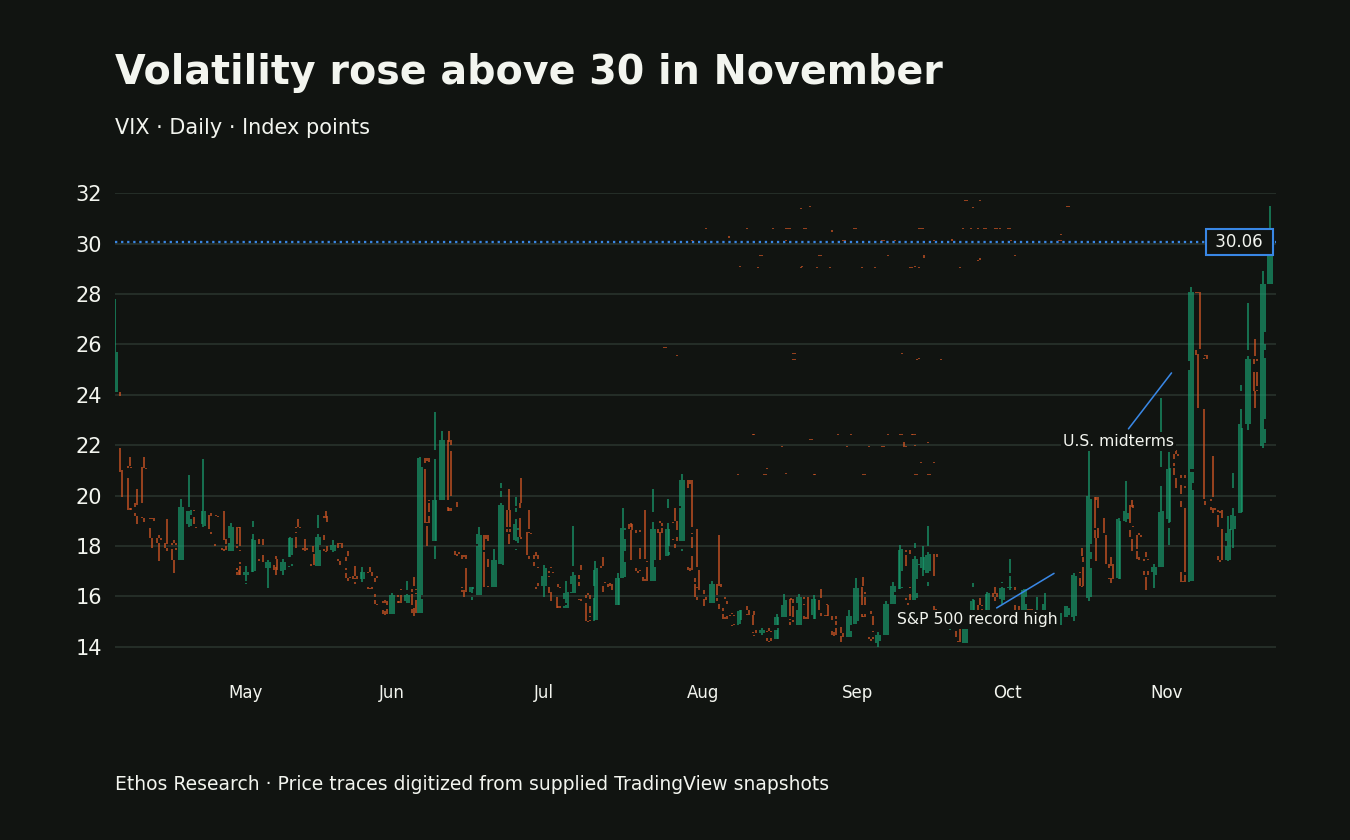
The Nasdaq-100 lost 10.4% over the week. The Kobeissi Letter’s bull case has a fair starting point. Earnings are growing, valuations have come down, and a scramble for cash can make people sell whatever they can. I can see how this ends up being a sharp correction. The inquiry is why I’m reluctant to call it here. Associated Press closing report · Nasdaq-100 weekly close calculation


What are you buying at ten times earnings?
You’re buying a share of what analysts think Nvidia will earn in fiscal 2028. On November 17, Nvidia reported $115.8 billion in quarterly sales, up 103% from a year earlier. Management said it expected sales to grow about 75% in fiscal 2028. There’s a reason people want to buy that kind of growth after a sell-off. [Verified] Nvidia results · Earnings call transcript
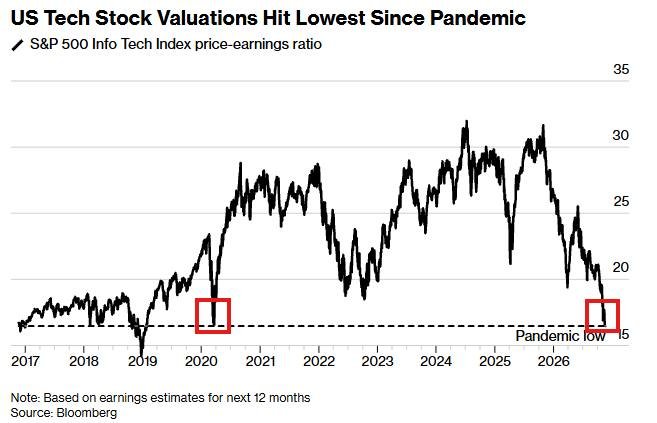
TIKR put Nvidia at about 13 times next-12-month earnings, against a five-year average of 36 times on the same basis. Its figure of about 10 times uses fiscal 2028 estimates. Say you buy at ten times the earnings analysts expect. If earnings come in a third lower, you’ve paid fifteen times what the company ends up making. How much can earnings fall before the bargain disappears? [Analysis] TIKR’s November 18 valuation snapshot

Who is paying for the buildout?
The cloud provider pays for the hardware and then has to earn back what it spent. Think of a rack of servers in a warehouse. The chipmaker has made its sale, but the buyer still has to pay for the power and find someone who’ll rent the time. Where does that money come from? How much of it comes from customers who can keep paying out of what they earn? Ethos on the economy and the AI trade

Anthropic’s public offering came to about $93.5 billion gross once the underwriters bought their extra shares. A separate $26 billion private placement included Nvidia, AMD, Google and Microsoft. Some of the businesses that stand to gain from more AI spending are putting up money themselves. [Verified] Anthropic’s closing announcement · Final prospectus
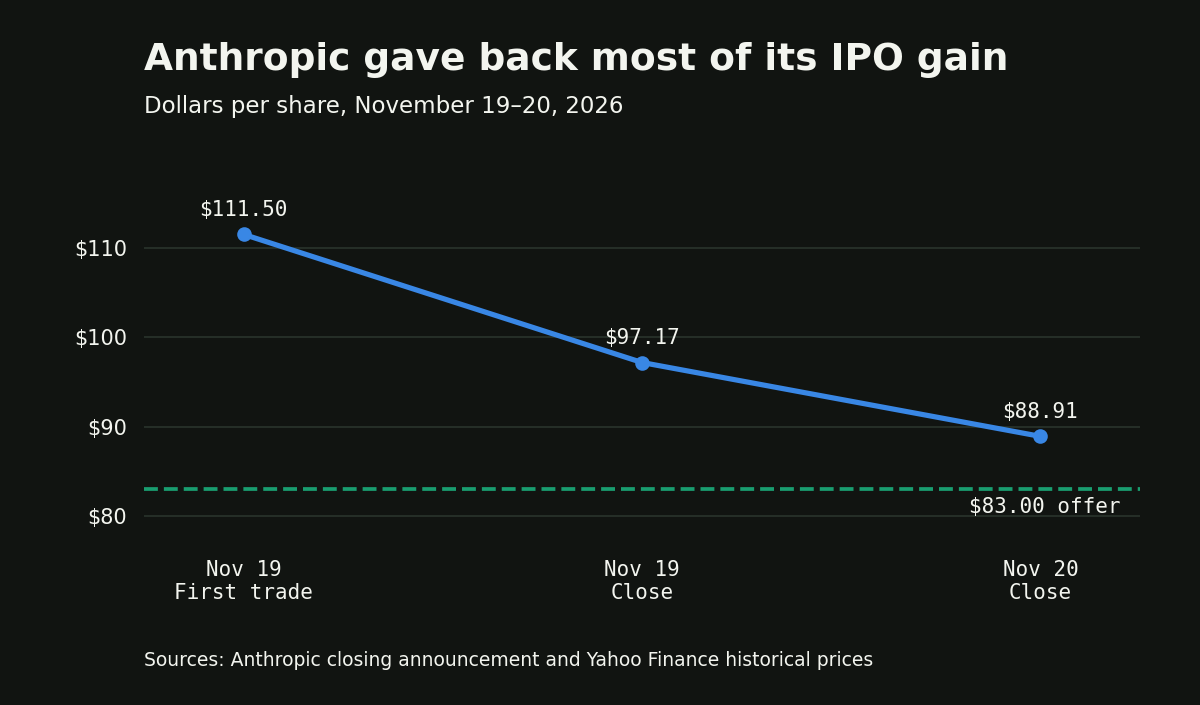

The size of the deal gives the liquidity argument some weight. If fund managers sell other holdings to make room for a big new one, you can get selling far beyond AI. How much they sold to do it is a different question. Nvidia ended Friday 47.5% below its October 6 level. The offering could have made a bad week worse. The slide was already weeks old. [Analysis] Axios drawdown data

How much help can come from Washington?
Cheaper oil could give the Fed more room to ease by mid-2027 if it takes pressure off inflation. At the November 19 settlement, January Brent was at $91.98, below the $93 level discussed in the bull case. December WTI settled at $83.21, just over $2 above the top of the $79–81 range. A ceasefire that lowers the risk to shipping through Hormuz could bring WTI into that range. A fresh disruption could send it the other way. [Reported] Sprague’s November 20 market report


The Fed raised its target by a quarter point in September and held at 3.75% to 4.00% in October. Two officials wanted another hike. A cut would ease some pressure on borrowers. I’d still ask what had weakened enough for the Fed to cut. [Verified] September statement · October statement
There’s a snag in using April 2025 as a template. The White House suspended higher country-specific tariffs for many trading partners that April. It could undo a policy that had helped set off the sell-off. If that White House backstop is weaker today, there’s less reason to expect the same quick rebound. April 9 executive order

What would make the bull case stronger?
I’d start with what Nvidia and regulators disclose about the scope of the reported inquiry. Reuters couldn’t pin down the specific accounting issues under review, and the SEC declined to comment. In the meantime, watch whether customers can keep funding purchases as the bills for all that capacity come due. [Reported] Reuters
The AMD story is worth reading for what Hunterbrook actually found. It said newer AMD firmware appeared in updates from IEIT Systems after the Chinese server maker was put on the U.S. Entity List. That leaves open who supplied the code and how it got there. Hunterbrook Capital disclosed a short position in AMD. [Reported] Hunterbrook’s investigation
There’s a case for calling this a correction, and there may be a much better one after the next round of filings. For now, I’d give those filings more weight than the next move in oil. The price on the screen has already come down. The part we still have to price is how much of the earnings will be there when we get there.
Frequently asked questions
Did the AI bubble pop in November 2026?
The sell-off shows that investors are willing to pay much less for AI-linked stocks. Whether it marks a lasting break depends on how much of the expected earnings survives and whether companies buying the hardware can keep paying for it.
Why do Nvidia’s forward earnings multiples differ?
Each multiple uses earnings from a different period. A fiscal 2028 estimate allows more time for earnings to grow than a next-12-month estimate.
How much did Anthropic raise from its IPO?
The public offering totaled about $93.5 billion gross, including the additional shares bought by underwriters. Anthropic also closed a separate $26 billion private placement.
How we checked the numbers
Information available on November 21, 2026. Market moves in the table use regular-session closes. Supplied chart snapshots retain their original labels, dates, and axes. The Anthropic offering figure multiplies 1.127 billion shares by $83 before offering costs. Green [Verified] marks a primary-source check, orange [Reported] marks an attributed claim, and blue [Analysis] marks an inference. Hunterbrook Capital disclosed a short position in AMD.
Sources
- The Kobeissi Letter: $6 Trillion in 45 Days, November 20, 2026, thread mirror.
- Reuters: Nvidia’s Accounting Is a Focus of US SEC Investigation, Sources Say, November 20, 2026.
- Nvidia: Financial Results for Third Quarter Fiscal 2027, November 17, 2026.
- FactSet: Earnings Insight, November 20, 2026.
- Anthropic: Closing of Initial Public Offering and Concurrent Private Placement, November 20, 2026.
- Associated Press: How Major U.S. Stock Indexes Fared, November 20, 2026.
- Hunterbrook: AMD Has Its Own China Problem, November 19, 2026.
Related on Ethos Research
- From the Dotcom Bust to the AI Boom, History Warns of a Growing Credit Risk
- Premarket Turmoil Suggests the AI Selloff Is Becoming a Macro Problem
- The Economy Is Barely Breathing, But Wall Street Keeps Buying The AI Story
- AI Bonds Reach Treasury Yields Through Three Channels That Crowding Out Does Not Explain
- When the Fed Finally Cuts, Ask What Broke First
Commentary, not investment advice.