
Este artículo solo está disponible en inglés.
An examination of how option pricing behaves under extreme stress conditions such as the Global Financial Crisis, Volmageddon, and the European Debt Crisis.
The analysis considers how volatility spikes, liquidity constraints, and model recalibrations influence derivative markets in 2025.
Introduction
Stress conditions in financial markets reveal the gap between theoretical assumptions and real-world behavior.
During stable periods, models such as the Black-Scholes model function with apparent precision. However, when systemic fear escalates during events like the 2008 Financial Crisis, the European Debt Crisis, or Volmageddon the assumptions of constant volatility and frictionless markets tend to fail.
This analysis explores option pricing under stress conditions, focusing on how volatility shocks reshape derivative valuation, risk management, and hedging frameworks.
The discussion highlights the behavior of pricing models when market balance deteriorates and how practitioners can adjust model parameters and calibration processes accordingly.

1. Understanding Stress Conditions in Financial Markets
Stress conditions refer to periods of systemic risk, liquidity stress, and contagion effects when market volatility becomes clustered and inter-asset correlations intensify.
Historical examples include:
- The 2008 Global Financial Crisis, which exposed structural weaknesses in credit derivatives.
- The 2010–2012 European Debt Crisis, characterized by widening sovereign spreads and credit contagion across European markets.
- Volmageddon (2018–2019), involving volatility ETNs and a surge in implied volatility.
- The COVID-19 market shock and the post-2022 inflation cycle, which highlighted liquidity constraints and interest-rate sensitivity.
These episodes demonstrate how macroeconomic instability alters derivative pricing and underscores the importance of stress testing and macro-risk awareness in model evaluation.
2. Fundamentals of Option Pricing Models
Traditional models such as Black-Scholes, Binomial, and Monte Carlo simulation approaches assume constant volatility and continuous price paths. Under crisis conditions, these assumptions rarely hold.
The divergence between implied volatility (expected market volatility) and realized volatility (historical price movement) widens significantly.
As a result, stochastic volatility models and fat-tail adjustments which account for extreme price movements become essential.
These frameworks allow for more realistic modeling of return distributions under heightened uncertainty.
3. How Stress Affects Option Pricing Dynamics
Under systemic stress, volatility smiles and volatility skews steepen as traders demand protection against downside risk.
Volatility surfaces often exhibit structural breaks, reflecting abrupt changes in correlation and liquidity. The so-called “vol of vol” effect volatility of implied volatility tends to intensify.
During the European Debt Crisis, cross-asset contagion created pricing anomalies across geographies, while liquidity pressures widened bid–ask spreads and introduced transient option mispricing.
Such dislocations illustrate how stress amplifies deviations from risk-neutral valuation assumptions.
4. Adjusted Models for Stress Scenarios
In extreme conditions, stochastic and jump-diffusion models better capture sudden market jumps and tail dependencies.
Frameworks such as the Heston model, local volatility, and SABR model are often recalibrated to reflect new volatility regimes.
Integrating liquidity risk and regime-switching dynamics into pricing equations enhances realism during periods of dislocation.
Indices like the VIX index and VStoxx index serve as benchmark indicators of market stress and are frequently incorporated into option valuation under stress frameworks.
5. Empirical Case Studies: Lessons from Market Crises
- 2008 Financial Crisis – The breakdown of Gaussian assumptions required significant model recalibration and adaptation to fat tails in return distributions.
- European Debt Crisis (2010–2012) – Demonstrated sovereign risk contagion, volatility spikes in Eurostoxx options, and inefficiencies in cross-border pricing.
- Volmageddon (2018–2019) – The XIV collapse highlighted vulnerabilities in short volatility products and triggered a volatility feedback loop across derivative markets.
- COVID-19 Market Panic (2020)– Record VIX levels and liquidity evaporation caused pricing gaps and hedging breakdowns.
- Post-2022 Inflation Cycle – Elevated interest rate volatility and tighter liquidity conditions continue to influence option valuation.
Each crisis exposed different stress channels, emphasizing the need for adaptable financial modeling under extreme conditions.
6. Managing Risk and Hedging Under Stress
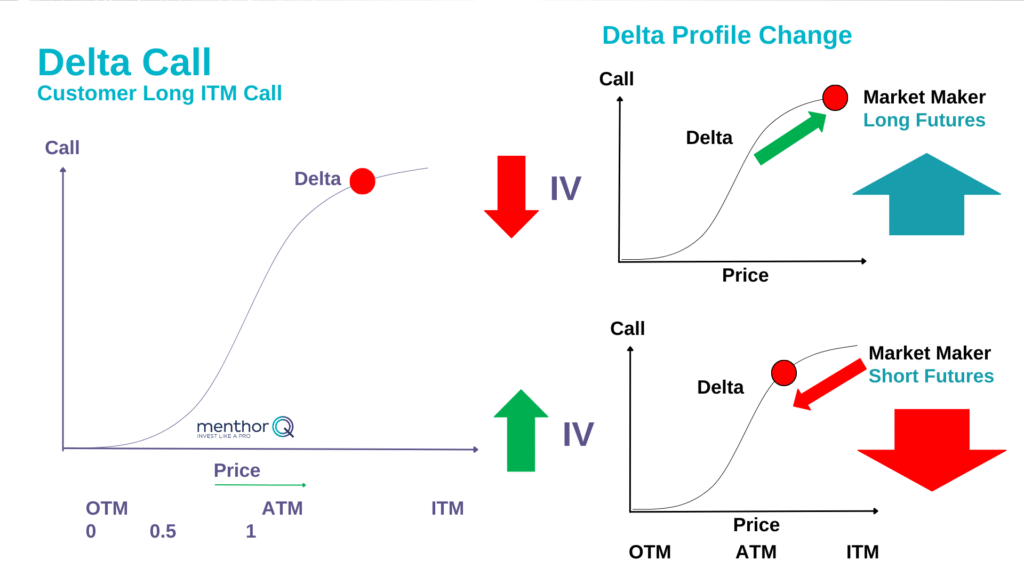
During volatility shocks, delta and gamma hedging techniques lose accuracy as implied volatility fluctuates rapidly.
Practitioners often evaluate trade-offs between dynamic hedging (frequent adjustments) and static hedging (fixed protection) under liquidity constraints.
Scenario analysis and portfolio stress testing are used to assess hedge effectiveness. Evidence from Volmageddon indicates that traditional volatility futures and options hedges may underperform when market liquidity deteriorates.
7. Behavioral and Psychological Dimensions
Behavioral factors play a significant role in amplifying stress. Panic selling, herd behavior, and investor sentiment shifts contribute to volatility clustering.
Leveraged volatility ETNs have been shown to accelerate feedback loops, as observed in the XIV collapse.
During the European Debt Crisis, narratives of contagion and uncertainty further distorted risk perception, leading to persistent pricing anomalies across derivative instruments.

Figure via Bloomberg :XIV Crash 2018
8. Practical Applications for Traders and Analysts
Interpreting volatility surface distortions can provide early warnings of model divergence. Monitoring implied volatility forecasts alongside realized measures helps detect emerging stress patterns.
Portfolio adjustments such as skew hedging, vega neutralization, and cross-asset correlation monitoring can mitigate exposure during extreme volatility.
Recent research explores machine learning approaches for volatility forecasting and scenario analysis, though empirical validation remains ongoing.
Conclusion
From the European Debt Crisis to Volmageddon, historical evidence shows that stress events redefine how option pricing behaves under real-world conditions.
Models that perform reliably in stable periods often require recalibration when market volatility escalates.
Effective adaptation lies in understanding the mechanics of volatility regime shifts, maintaining rigorous risk management, and applying stress testing principles that align with observable market dynamics.
In 2025, the focus is not on avoiding volatility but on pricing it with greater precision.